I’m going to open by asking you to recall if any of your friends doesn’t own a smartphone. I bet you can’t think of a single person.

In today’s world, it is hard to find someone who doesn’t own a mobile phone. In 2015, there were 4.15 billion mobile phone users worldwide and within 3 years, it grew to 4.68 billion users. Furthermore, data has forecast that it will pass the 5 billion mark by 2019.
With the world’s population at 7.6 billion and close to 5 billion people owning a phone, can you imagine that about 65% of the world population is on a mobile!

This definitely helps to explain why companies are leveraging on technology and promoting their products/services through mobile marketing! There are many different mobile marketing channels, but today I would like to focus on a specific type called Location-Based Services (LBS).
Companies that use mobile marketing as part of their strategy have some knowledge about the consumers: Who they’re dealing with, but more importantly for LBS would be their geographical position at any time. There are different classifications of mobile marketing which is dependent on whether the message takes into account the specific location of the user (location-sensitivity), and if it is processed by the user immediately or with a delay (time-sensitivity).
Location-Based Services (LBS)
In this case, for LBS, what do you think it is?
Too easy to guess isn’t it? The name reveals it all.
LBS is definitely location-sensitive and most of the advertisements that are sent through such channels are time sensitive as well. There are different types of LBS such as location tags, hashtags, keywords, and geotargeting.

An example of a brand who utilizes this strategy efficiently is Whole Foods, a supermarket chain. They partnered with a location-based marketing firm called Thinknear to improve post-click conversion rate for its mobile ads. At the same time, they also targeted ads around competitors stores to attract potential customers away to their stores.
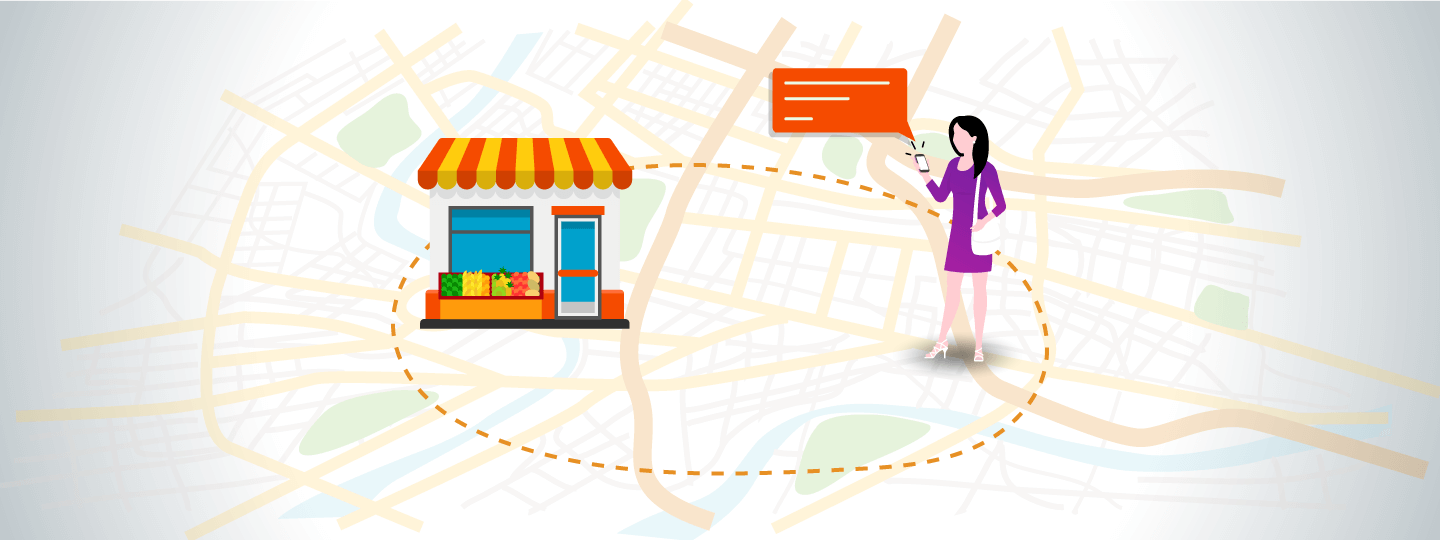
They did so by placing geofences around several Whole Food store locations, then sent mobile users targeted ads and special offers when they walked past. Furthermore, they used the same technique around their competitors stores to incentivize them to get better deals and convert them to Whole Food customers instead. This campaign yielded Whole Foods a 4.69% post-click conversion rate which is 3 times more then the national average.
In case you are unaware of why you are a target of such mobile marketing strategies, you will realize it shortly..
We often don’t know that when we sign up for promotional offers or mailing lists, we give much more information that we expect to marketing companies. Some applications under the Apple and Google store also auto-enable sharing your location even when you’re not using the app, until you turn it off. Therefore, you could be sharing your location with multiple companies and not even know it!
While LBS offers good spontaneous promotions and sometimes can benefit customers, it also shows that our data is being shared to multiple organizations that we may not know about. Will this become more of a positive or negative marketing method in the future?

 DiGiTure
It’s good in the sense that it helps streamline what options do we have available at a given location: however, given its proliferation, we might come to a point whereby deploying such means is simply a point of parity; wherein most if not all firms would engage in the same tactics to not be removed from competition. This would lead to information overload which may instead repel consumers as people tend to prefer to take mental shortcuts than to digest information on ads and anywhere. Another possibility being, sceptics may be sceptical about the ads they receive and question the ethicality and values the firms stand for and hence not trust the brand.
LikeLike
Hi Jamie, I agree especially during times when we get too overwhelm by spams from companies, it can backfire and cause them to NOT use the brand instead. This is because consumers like me does not trust such promotional message easily and what usually go through my mind is the origin of such dubious promotional message or in fact choose to ignore it.
LikeLike
In my personal opinion, even with the potential drawbacks like privacy being compromised to a certain extent. It is somewhat a positive direction for marketing, as the technology evolves and we move more into the digital age its only natural that businesses adopt smarter ways to figure out the opinions and thoughts of the users more natural “day to day activity” standpoint to attract the right audience instead of spending more to mass market themselves out, though it does invade privacy to an extent and won’t be 100% accurate all the time it is definitely a smart approach and as long as there are limits, regulators auditing and proper ethics to how far companies can go with this method of obtaining data. To me, whether this ultimately ends up being more positive or negative, its only a matter of time that companies adopt this method or other similiar methods to procure information for their marketing strategies as technology rapidly advances, businesses will definitely adapt and eventually this or a method similiar to LBS will be part of the new norm sooner rather than later thus it is of importance that it is adopted and regulated the right way by companies in the future.
LikeLike
Hi E O, thanks for sharing your thoughts and opinion about this. Similar to what I responded to Isaac and I agree that in the process of generating profit, organisation should always keep their values in mind and do the right thing (not going against any ethical issues).
LikeLike
LBS allows the business to market to their target customers more effectively. However, it brings along privacy issue. Customers may now be tracked or stalked by brands, which is unappealing to privacy sensitive customers. There must be a choice for customers to restrict what kind of information brands have access to.
LikeLike
Hi B, I think both you and I, and probably many people out there have been targeted by such marketing strategies before, receiving message like tutoring services, financial loan services and maybe some promotional message can be annoying at times. I think what’s worst is we don’t know why we are targeted, and why companies are able to access our information.
LikeLike
It’s again a compromise between convenience and privacy.
An important prelude would be to note that companies are increasingly nefarious about hiding your ‘consent’ to sharing these informations till you go and manually turn it off, and I don’t rlly approve of that, but that’s more a matter of doing your own due dilligence if this kind of thing concerns you (or wait for better regulation).
Companies love big data, big data allows them to develop more targeted ads which will allow them to be more effective whilst spending less money. Consumers benefit from this data too, they get what they want or what they possibly could want faster. On the flip side it also makes holding off on things harder but meh 🤷🏻♂️.
I think the trend itself is positive, it’s just that corporations are capitalistic by nature and greedy and take things too far (eg Cambridge Analytica and Facebook), hence they need to be REGULATED properly (but not over regulated) by the government in order to protect the lay consumer.
Just like how technology is evolving faster and faster, LBS is just the next evolution in advertising for companies to take advantage in offering more targeted solutions to consumers. Similar to how social media increased the proliferation of news but needs (and is starting to get) regulation to limit fake news, LBS is a positive thing that just needs that regulatory framework to keep it from turning negative.
LikeLike
Hey Isaac, thanks for your comment! What you said is true and I feel that organisation play a big role in ensuring that it doesn’t become something negative, they should always ensure what they are doing is ethical and not just profit-driven.
LikeLike
Its inevitable that as we get more connected, we also get more exposed. Our phones alone give up a wealth of information for marketing companies and others just from location tagging, connecting to wifi hotspots or even from the applications we download. All user data goes somewhere and we generate way more data about ourselves on a daily basis than many of us are actually aware of.
There are definitely benefits to this increased connectivity which companies can leverage, as shown above. However, it is becoming increasingly easier for companies to exploit this data as well. Targeted advertising can be used to leverage vulnerable groups, or spread malicious messages that implicate significant real-life events. As more and more of our lives are recorded online, this is becoming the new reality.
LikeLike