Everyone today is talking about Big Data and IoT, and I’m sure you’ve heard them being mentioned in numerous TED talks. You may ask though, what exactly are they and what do they mean?
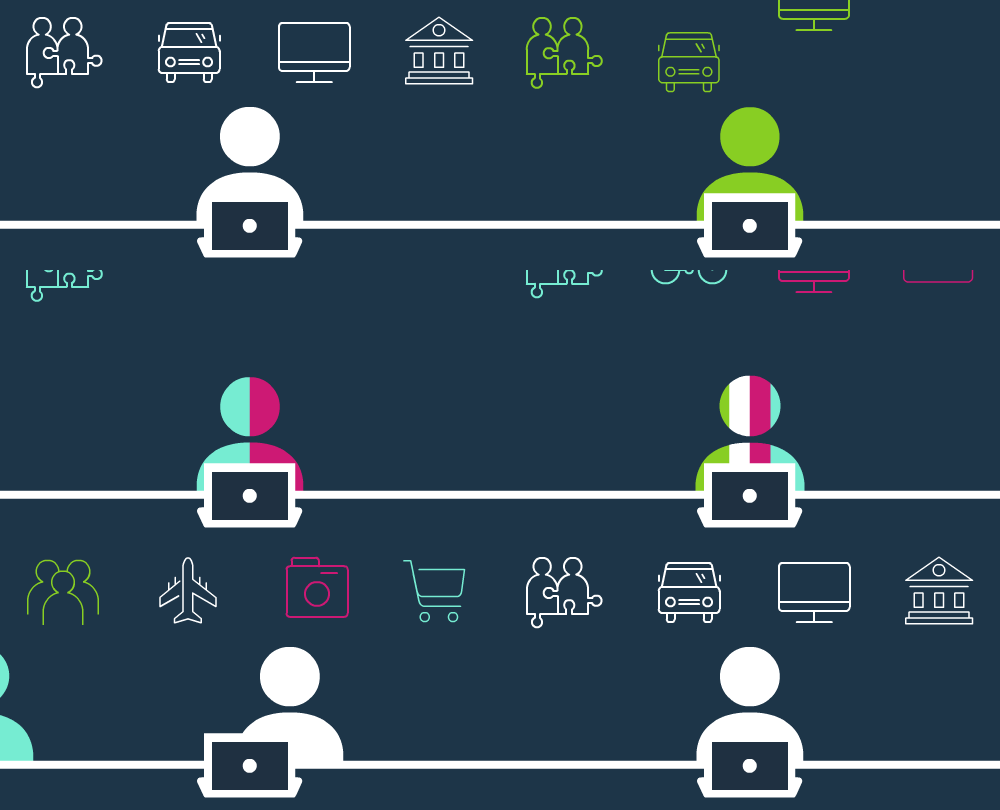
IoT is basically described as the “Senses” while Big Data is the “Fuel” and artificial intelligence is the “Brain” of the future of a smart connected world. The real value of IoT is about creating smarter products, delivering intelligent insights and providing new business opportunities which triggering a massive influx of Big Data. This is done so through increasing the connectivity of devices around our environment.
While IoT devices come with increased connectivity and convenience, it also comes with it’s share of dangers and issues.
1. High Data Volume Leads To Cyber-Security Risk
With the sheer volume of data being collected daily, it poses as a significant threat to cyber-security. With the increasing development of IoT, cyber security risk is here to stay. Companies need to be more vigilant on who they employ to secure their networks and devices against unwanted cyber attacks, as they possess significant amounts of sensitive consumer data. A cyber attack can also hinder business operations.
One example that happened last year was Singapore Health System. This is one of the most serious data breaches in Singapore to date, which caused 1.5 million patient records being accessed and copied by the hackers.
Another example was Uber being hacked and ransomed by hackers.
In 2016, Uber suffered a data breach, where hackers stole personal data which included the names and driver license number of about 600,000 drivers in US. Although the data breach was damaging, the decision by Uber to pay a $100,000 ransom to cover up the breach and destroy the data led to even more negative publicity to the brand.
2. Increasing Connectivity Leads to Increasing Vulnerability
With the increasing number of IoT devices, any weak point in a company or home can be exploited. A casino was even hacked through their fish tank, which was connected to a wireless network! In the digitized world today, every action that you do transmits data, whether you click on a link or purchase something. This can include your personal information, credit card details or medical records.
A Federal Trade Commission report stated that 10,000 households can generate 150 million data points daily which provides a significant number of entry points for hackers. With IoT devices all connected to a wireless network, this information can bounce around and eventually find its way to a device that had no initial connection to your data.

3. More Data May Create More “Headaches” for Marketers
With the continuous exponential growth of data, especially around IoT, there will definitely be massive pressure on marketers to filter and select which data to capture and which will be relevant. The pressure of analyzing data will increase over time as it is hard to determine which data will be useful today or in a few year’s time. Overall, the limitations for marketers at the moment is that there are way too many variables to look at, which restricts marketers from gaining a complete view of consumer behavior.

What do you think are the steps or precautions that companies should take to avoid privacy or security issues to happened?
Below is a short video where I find it really useful about ways to protect your company from data breach.







 DiGiTure